
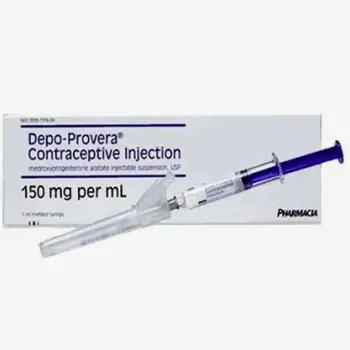
 h2>Depo shot side effects at a glance
Depo-Provera CI is a prescription contraceptive injection containing medroxyprogesterone acetate, given as a deep intramuscular shot every three months. Like any hormonal method, it comes with a range of possible side effects, and understanding the difference between what is expected and what is rare but serious can help you know what to watch for and when to call a clinician.
Most people who use the shot experience changes to their menstrual cycle, and many notice other effects such as headaches, weight changes, or mood shifts. These are common enough to appear regularly in clinical trial data, though how they show up, if at all, varies a lot from person to person. A side effect listed on a medication label reflects what was reported during studies, not a guarantee of what any individual will experience.
The label carries a boxed warning about bone mineral density loss with extended use, along with more recently added information about a possible association with meningioma, a typically benign brain tumor. These are less common concerns, but they are significant enough that the prescribing information addresses them directly, particularly for people using the shot for several years or those with certain risk factors.
Walk through bleeding changes, common side effects, bone density, meningioma, warning signs that need prompt medical attention, who should discuss added risks before starting, how side effects are typically managed, and what to expect after stopping the injections.
Bleeding and period changes
Changes to menstrual bleeding are the most consistent effect of the Depo shot, and they follow a fairly recognizable pattern over time. In the first months of use, many people experience irregular bleeding or spotting that doesn't follow a predictable cycle. This tends to be most noticeable early on and generally becomes less frequent the longer someone continues using the injection.

Clinical trial data reflect this shift. Bleeding was reported by roughly half of participants at the one-year mark, but that figure dropped substantially by two years, while the opposite pattern occurred with amenorrhea, or the absence of periods. About half of users reported no periods at all after one year, and that proportion rose further by two years. Over time, more users tend to shift from irregular bleeding toward little or no bleeding.
What amenorrhea does and doesn't mean here. The absence of a period while using Depo-Provera is a recognized and expected hormonal effect, not evidence of pregnancy or a sign that fertility has been affected.
Not all bleeding patterns fall within the expected range. The product labeling specifically notes that unusually heavy or continuous bleeding is not typical and should be evaluated by a healthcare professional rather than assumed to be a normal variation. If bleeding is heavier than a normal period, lasts much longer than expected, or is accompanied by pain or dizziness, it's worth getting checked rather than waiting it out.
Other common side effects
Beyond menstrual changes, several other side effects show up often enough in clinical studies to be worth knowing about. Headache, abdominal pain or discomfort, nervousness, dizziness, and decreased libido were each reported by more than 5% of participants in trials. Less frequently, users reported fatigue, nausea, bloating, fluid retention, low mood, acne, hair thinning, vaginal discharge, and breast tenderness.
These figures describe how often something was reported in a study population, not the odds that any one person will experience it. Two people using the same medication can have very different experiences, and a side effect appearing on a list doesn't mean it's likely for you specifically.
Weight change deserves a closer look because it's one of the more commonly asked-about effects. Among people who completed clinical follow-up, average weight gain measured from a starting weight in the 130s was a little over five pounds after one year and around eight pounds after two years. These are group averages among people who stayed in the study, not a fixed outcome. Some people gain more, some gain less, and some don't gain weight at all. There's no reliable evidence that a specific diet, supplement, or exercise routine will prevent weight change tied to the injection, so it's more useful to track your own pattern over time than to expect a universal result.

If a symptom in this category feels persistent or disruptive, it's a reasonable thing to bring up at a follow-up visit, even though none of these effects are considered medical emergencies on their own.
Depo-Provera CI Side Effects Understanding
Bone mineral density loss and longer-term use
One of the more significant warnings associated with the Depo shot involves bone health. The medication carries a boxed warning, the strongest type of caution on a US drug label, stating that use can lead to significant loss of bone mineral density. This loss tends to increase the longer the medication is used, and it may not fully reverse after stopping.

Because of this, the US label does not recommend using Depo-Provera CI for longer than two years unless other birth control methods are considered inadequate for that person's situation. This is a risk-benefit guideline built into the labeling, not an absolute rule that applies the same way to everyone or proof that anyone who uses the shot beyond two years will develop osteoporosis. For many people, the decision to continue past that point involves weighing bone health against the practical benefits of the method and the alternatives available.
Bone density loss is flagged as a particular concern for adolescents and young adults, since this is typically a period when peak bone mass is still being established. The label calls for evaluating bone mineral density when someone needs to continue the injection long term, and it recommends considering other contraceptive options for people who already have risk factors for osteoporosis.
Separate two related but distinct ideas: a measured decline in bone density on a scan is not the same as a guarantee of a fracture later in life. Whether bone loss during adolescence or early adulthood affects fracture risk decades later remains an open question that current evidence doesn't fully answer.
Meningioma risk and what the evidence shows
A newer addition to the Depo-Provera CI label addresses meningioma, a tumor that develops in the tissue surrounding the brain and spinal cord and is usually noncancerous. The updated US labeling states that prolonged use may increase the risk of meningioma, and it advises against use in people with a current or past meningioma. If someone using the shot is diagnosed with a meningioma, the label directs that the injection be discontinued.

This warning is grounded partly in a 2024 French case-control study that looked at people using injectable medroxyprogesterone acetate at the same 150 mg dose. The study found an association between prolonged use and intracranial meningioma serious enough to require surgery, with a calculated odds ratio in the range of roughly five and a half, meaning the association was notably elevated in that dataset. The number of exposed women in the study was small, the statistical range around that estimate was wide, and the study design, being observational, cannot prove that the injection caused the tumors.
. An odds ratio describes a relative association within a specific study population, not an individual's personal probability of developing a meningioma. It also doesn't mean that common symptoms like headaches or vision changes are evidence that a tumor is present. If you're using or considering Depo-Provera and have a history of meningioma, that history is relevant information to share with your prescriber, but the existence of this research association doesn't translate into a specific risk number for any one person.
Serious side effects and warning signs
While most Depo shot side effects are manageable and don't require urgent care, a smaller set of symptoms should prompt fast medical attention rather than a wait-and-see approach.
Seek emergency care for symptoms that could indicate a blood clot or stroke, such as sudden leg swelling or pain, chest pain, shortness of breath, severe headache unlike your usual pattern, sudden vision changes, slurred speech, or weakness on one side of the body. The label notes that serious thrombotic events have been reported in people using the medication, though it also states that a causal link between the injection and these events has not been established. That distinction doesn't make the symptoms less urgent; it simply reflects what the available evidence can and can't confirm.
Signs of a severe allergic reaction, including difficulty breathing, swelling of the face or throat, or a rapid-onset rash, also require emergency evaluation. If pregnancy occurs despite the injection, there's an increased likelihood it could be ectopic, so new pelvic pain with a positive pregnancy test needs prompt assessment.
Other symptoms warranting timely, though not necessarily emergency, evaluation include signs of liver problems such as yellowing skin or eyes, and new or worsening neurological symptoms like persistent headaches, vision changes, hearing changes, or memory difficulties, which could relate to meningioma in rare cases. None of these symptoms should be self-diagnosed. Getting evaluated allows a clinician to determine the actual cause rather than assuming the worst or dismissing the symptom.
Who should discuss added risks before using Depo-Provera
Certain medical histories change whether Depo-Provera CI is appropriate, and it's worth knowing the difference between an outright contraindication and a history that simply calls for a closer conversation with a prescriber.

The medication is contraindicated for people with active thrombophlebitis, a current or past history of blood clots or stroke, known or suspected breast cancer, significant liver disease, unexplained vaginal bleeding that hasn't been evaluated, or a known hypersensitivity to medroxyprogesterone acetate or the injection's other ingredients. These are conditions where the label advises against use altogether.
Other factors don't rule out the injection automatically but do call for individualized risk discussion. These include a personal history of meningioma, since the updated labeling advises avoiding the shot in that situation, as well as osteoporosis risk factors given the bone density warning, and a history of depression, which appears among reported effects in clinical data. Anyone considering long-term use who falls into one of these categories benefits from a more detailed conversation about whether the injection remains the right fit over time.
This guidance reflects the US-labeled formulation given by intramuscular injection. Other medroxyprogesterone products, including subcutaneous formulations, are dosed and labeled differently, and rules in other countries may not match US prescribing information. If you're using a different product or are outside the US, check that product's current labeling rather than assuming these details transfer directly.
Managing side effects and deciding whether to continue
If you're experiencing side effects from the Depo shot, the right response depends on what you're dealing with and how much it's affecting you. A practical starting point is simply tracking what's happening: when a symptom started, how often it occurs, and whether it's improving, staying steady, or getting worse. That kind of record makes conversations with a clinician more productive than trying to describe a vague pattern from memory.
For persistent or bothersome effects, especially bleeding changes, mood symptoms, or weight changes that concern you, it's reasonable to bring them up at a follow-up appointment rather than assuming nothing can be done. Depending on the specific symptom, a clinician might evaluate for another underlying cause, discuss whether the timing or pattern is expected, or talk through switching to a different contraceptive method altogether. What's appropriate really depends on the individual symptom and situation, so there isn't a single fix that applies universally.
One important practical reality: once an injection has been given, it cannot be removed or reversed. The medication continues to act in your body until it wears off, which means that even if you decide not to get another shot, current side effects don't disappear immediately. This is different from a daily pill you can simply stop taking. If you're weighing whether to continue, it helps to think in terms of your next scheduled injection and to have that conversation with your clinician before the next dose is due, factoring in your risks, benefits, other available methods, and any plans around future pregnancy.
What happens after stopping the Depo shot
Because Depo-Provera CI is designed to release medication gradually over three months, its effects don't end the moment you skip your next injection. Menstrual cycles and fertility can take time to return to their prior pattern, and how long that takes varies from person to person.
Data drawn from a large US study of people who stopped the injection specifically to become pregnant offers some perspective. Among those who did conceive and had follow-up information available, the midpoint time to conception was about ten months after the last injection. Most who conceived did so within a year to a year and a half, and by eighteen months the large majority had conceived. How long someone had been using the injection beforehand did not appear to affect how quickly conception occurred once they stopped.
A delayed return of ovulation is not the same thing as infertility. It means the hormone needs time to clear and for a normal cycle to reestablish itself, not that the injection has caused a lasting inability to conceive. Contraceptive protection can wane before a period returns, so pregnancy is possible even before your first post-injection period shows up if you're not using another method.
Other effects, including bone density changes, may not resolve on the same timeline, and current evidence doesn't guarantee that bone density fully returns to baseline for everyone after stopping. If you have specific concerns about how quickly your body should be returning to its prior pattern, a follow-up conversation with your clinician is the most reliable way to get guidance suited to your situation.
Depo-Provera CI is a hormonal contraceptive injection that most commonly causes changes to menstrual bleeding, typically starting with irregular spotting and often shifting to absent periods over time. Other frequently reported side effects include headaches, weight changes, and mood shifts, though individual experiences vary. The medication carries a boxed warning for bone mineral density loss that increases with use beyond two years and may not fully reverse, prompting caution for adolescents and individuals with osteoporosis risk factors. The label also warns of a potential association between prolonged use and meningioma, a typically benign brain tumor, and advises against use in anyone with a current or past history of the condition.
Serious side effects requiring emergency care include symptoms of blood clots or stroke, such as sudden leg swelling, chest pain, severe headache, or vision and speech changes, as well as signs of a severe allergic reaction. Unusually heavy bleeding, signs of liver problems, or new neurological symptoms warrant prompt medical evaluation. Because the injection cannot be removed or reversed, side effects persist until the medication gradually wears off. After discontinuing the shot, the return of fertility is often delayed, with most users taking up to 18 months to conceive, but this delayed ovulation does not mean the injection causes permanent infertility.
Source organization: Pfizer
Source organization: Centers for Disease Control and Prevention
Questions & comments
Please do not include passwords, medical record numbers, insurance information, financial information, precise addresses, or other confidential or directly identifying information in your message.