
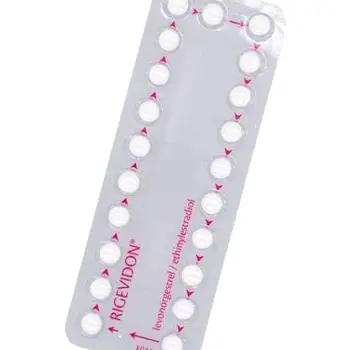
 h2>Rigevidon at a glance
Rigevidon is a combined oral contraceptive authorised for use in the UK to prevent pregnancy through hormonal suppression of ovulation and changes to the cervical mucus. Each tablet contains two active ingredients: 150 micrograms of levonorgestrel, a progestogen, and 30 micrograms of ethinylestradiol, an oestrogen. This combination defines it as a monophasic pill because every tablet in the blister pack contains the identical dose of both hormones throughout the entire course of use.

As a prescription-only medicine, Rigevidon is subject to specific regulatory guidance within the United Kingdom. The instructions provided here reflect current UK labelling and clinical standards, including those from the Summary of Product Characteristics and NHS resources. Readers must always prioritize the printed leaflet accompanying their specific pack or any directions given by their prescriber, as these documents contain the most up-to-date and legally binding information for individual use.
The standard 21-day schedule and 7-day break
The labelled regimen for Rigevidon requires taking one tablet by mouth every day in the order indicated on the blister pack, at approximately the same time each day. This daily intake continues for 21 consecutive days. Once the final tablet in the pack has been taken, a seven-day tablet-free interval follows.
Withdrawal bleeding typically begins within two or three days after the last active tablet is consumed. It is common for this bleeding to continue into the eight-day period. The start of the next blister pack is fixed: it must begin on the eighth day after the previous pack ended, regardless of whether bleeding has fully stopped. This timing rule applies even if menstrual flow persists; the hormone-free interval does not extend until bleeding ceases.

Maintaining a consistent daily time helps keep hormone levels stable and reduces the risk of breakthrough spotting or ovulation. Setting a specific alarm or linking pill-taking to an established daily habit, such as brushing teeth or eating breakfast, can support adherence. Deviations from this routine are addressed in subsequent sections; for now, the priority is completing the 21-day course on schedule and initiating the next pack without delay.
When to start Rigevidon
The timing of the first tablet depends on whether you are starting Rigevidon for the first time, restarting it after a break, or switching from another contraceptive method. The instructions differ based on your cycle and previous use.
For a new user who has not used any hormonal contraception in the preceding month, the product label recommends starting on day 1 of your natural menstrual cycle (the first day of bleeding). This ensures immediate protection against pregnancy. Alternatively, NHS guidance allows you to start at any time during days 1 to 5 of your cycle, which also provides immediate contraceptive effectiveness.
If you begin taking Rigevidon after day 5 of your cycle, or if it has been more than five days since your period started, you will not be immediately protected. In this scenario, you must use additional contraception, such as condoms, for the first seven days of pill-taking. This rule applies unless your menstrual cycles are consistently shorter than 20 days, in which case pregnancy could already be present if ovulation occurred early; individual advice is essential in these cases. If there is any possibility that you were pregnant before starting the pill, NHS guidance advises taking a pregnancy test three weeks after your last unprotected sexual intercourse to confirm safety.
These general rules for initial use do not cover switching from other contraceptive methods. Specific transition instructions are detailed in the following section, as moving from rings, patches, or progestogen-only methods requires different timing to maintain protection.
Rigevidon Use Checklist
Switching to Rigevidon from another contraceptive
Transitioning to Rigevidon from a different contraceptive method depends entirely on the specific type of contraception you were previously using and whether it was used correctly. The timing of your first Rigevidon tablet and the need for additional protection vary by method. Always check the leaflet inside your new pack or consult your prescriber if your situation does not match the standard pathways described below.
Switching from another combined oral contraceptive, ring, or patch If you are switching from another combined pill, vaginal ring, or contraceptive patch that you have used correctly, start taking Rigevidon on the day after your usual hormone-free interval or placebo period ends. For example, if you normally take a seven-day break from your previous pill, begin Rigevidon on the eighth day. If you use a ring or patch, remove the old device on the scheduled date and insert or apply the new method immediately the following day. In these cases, additional contraception is generally not required if you adhere to the schedule strictly.
Switching from a progestogen-only method The process differs if you are moving from a progestogen-only pill (POP), implant, injection, or hormonal intrauterine system (IUS).
- Progestogen-only pill: Start Rigevidon on the day after your last active POP tablet. You must use additional contraception, such as condoms, for the first seven days of taking Rigevidon.
- Implant or hormonal IUS: Remove the device or have it taken out on the day you would have started a new cycle of that method, and begin Rigevidon immediately. Additional contraception is not needed if the removal occurs on time, but check your specific method's leaflet for precise instructions regarding late removal.
- Injection: Take your first Rigevidon tablet on the day your next injection dose was due or within one week after it was due, depending on your provider's guidance. Additional contraception is required for the first seven days if the injection was late or if more than seven days have passed since your scheduled injection date.
Uncertain switching scenarios If you are switching from an irregular method, have missed previous doses, or are unsure about the correct timing, you should assume that additional contraception is needed for the first seven days. For complex transitions or if you cannot locate specific guidance for your previous method, contact your GP, sexual health clinic, or pharmacist before taking your first Rigevidon tablet to ensure continuous protection against pregnancy.
Taking Rigevidon back to back or changing a bleed
The traditional regimen involves taking active tablets for 21 days followed by a seven-day break, which triggers a withdrawal bleed. The standard 21-days-on/7-days-off schedule offers no specific health advantage over alternative patterns. Clinical guidelines from the Faculty of Sexual and Reproductive Healthcare (FSRH) confirm that monophasic combined pills like Rigevidon can be used in tailored regimens that result in fewer, shorter, or completely absent hormone-free intervals. Users should be offered a choice of regimen based on personal preference and clinical suitability, allowing for extended use where desired.
Rigevidon's product label provides specific instructions for delaying one withdrawal bleed. To postpone your period, start the next blister pack immediately after finishing the current one, without taking the seven-day break. Continue taking tablets from this second pack until you choose to have a bleed or until the pack is finished; you must not extend the subsequent tablet-free interval beyond what is instructed. While this method is effective for short-term schedule adjustments, some users may experience spotting or breakthrough bleeding during the extended active phase.
Distinguish between delaying a single bleed and adopting a long-term tailored regimen. The label's advice applies to one instance of back-to-back use. For ongoing changes to bleeding patterns, such as skipping breaks entirely for several months, clinical guidance supports this practice for suitable candidates, though the frequency of breakthrough bleeding may increase over time.
A common misconception is that a monthly withdrawal bleed is medically necessary. It is not; it is a response to the hormone-free interval. Rigevidon and other oral contraceptives do not protect against HIV or other sexually transmitted infections, regardless of bleeding patterns. If you are concerned about clotting risks or have a medical history that affects suitability, consult your prescriber before altering your regimen, as safety assessments must be reviewed periodically during extended use.
What to do if a Rigevidon pill is late or missed
Rigevidon uses a specific twelve-hour window to determine whether a tablet is late or missed. The action required depends entirely on how much time has passed since your scheduled dose and which week of the blister pack you are in. Always refer to the official leaflet for the complete algorithm, as individual circumstances vary.
Tablet less than 12 hours late If you remember a tablet less than 12 hours after your usual time, contraceptive protection is not reduced. Take the missed pill as soon as you remember, even if this means taking two tablets at once. Resume your regular schedule for the remaining tablets in the pack, taking each one at your normal daily time. No additional precautions are required.
Tablet more than 12 hours late or missed If a delay exceeds twelve hours, protection may be reduced. The general immediate action is to take the last missed tablet as soon as you remember, even if it means taking two tablets together on the same day. Continue taking the remaining tablets at your usual time. Do not discard any pills; follow the specific guidance for the current week of use.
Week 1 (Days 1-7) If a pill is late or missed during the first week, additional contraception (such as condoms) must be used for the next seven days. If you had unprotected sexual intercourse in the seven days before missing the pill or during the previous tablet-free interval, there is a risk of pregnancy. Seek advice from a pharmacist or GP immediately to discuss whether emergency contraception is needed.
Week 2 (Days 8-14) Action depends on whether all other pills taken in the preceding seven days were correct. If you have taken every pill correctly during the previous week, take the missed pill as soon as remembered and continue normally; additional contraception is generally not required. If you failed to take pills correctly during the previous week, treat this scenario as a Week 1 situation: use additional precautions for seven days and consider pregnancy risk if unprotected sex occurred.
Week 3 (Days 15-21) Because the hormone-free interval follows immediately, missed pills in the final week carry a high risk of ovulation if a break is taken. You have two options:
- Finish the current pack and start the next blister immediately, skipping the seven-day break entirely. You may experience spotting or breakthrough bleeding, but protection is maintained.
- Discard any unused tablets from the current pack and take a tablet-free interval of up to seven days (including the days pills were missed). Start the new pack on schedule.
If you choose either option and had unprotected sex in the preceding seven days, pregnancy risk exists; seek professional advice regarding emergency contraception.
Vomiting and severe diarrhoea
Vomiting or severe diarrhoea can prevent Rigevidon from being fully absorbed by the body. The product label identifies a specific three-to-four hour window after taking a tablet during which this risk exists. If symptoms occur within this timeframe, the pill is considered to have been lost.
Taking a replacement tablet If you vomit or suffer severe diarrhoea within three to four hours of taking your tablet, take another tablet as soon as possible. Ideally, this replacement should be taken within twelve hours of your usual scheduled dose time. Once the tablet is taken, resume your normal routine and do not skip subsequent tablets.
When to apply missed-pill rules If it has been more than twelve hours since your usual dose time and you are unable to keep a replacement tablet down due to ongoing illness, the situation changes. You must follow the specific instructions for late or missed pills outlined in the previous section. The actions required will depend on which week of the pack you are in and whether you have unprotected sex during this period.
Illness near the end of a pack Gastrointestinal issues towards the end of your blister pack (Days 15-21) require careful management. If you remain unwell during your intended seven-day break or into the start of the next pack, absorption may be compromised. In such cases, consult the missed-tablet guidance for Week 3 or seek advice from a pharmacist or prescriber to determine whether to extend your current pack or adjust your upcoming tablet-free interval to maintain protection.
Mild symptoms vs. severe illness Do not treat mild stomach upset as equivalent to severe diarrhoea or persistent vomiting. Mild nausea that does not involve vomiting is unlikely to affect absorption significantly. Any condition that prevents the retention of the pill for the critical three-to-four hour window necessitates taking a replacement tablet immediately to ensure contraceptive efficacy.
Medicines, herbal remedies and emergency contraception
Many prescription medicines, over-the-counter products, and herbal supplements can interact with Rigevidon. These interactions generally fall into two categories: those that reduce the pill's effectiveness and those where the pill affects other treatments. Because the clinical implications vary significantly depending on the specific drug, you must check all new medications with a pharmacist or prescriber before starting them.
Enzyme-inducing medicines A group of drugs known as enzyme inducers lowers the level of sex hormones in your blood by speeding up how your body breaks them down. This reduction can cause breakthrough bleeding and reduce contraceptive protection, potentially leading to unintended pregnancy. Common enzyme inducers include:
- Antiepileptic medicines such as carbamazepine, phenytoin, and primidone
- Some HIV medications
- The migraine preventer topiramate (at higher doses)
- The antibiotic rifampicin and its relative rifabutin
- St John's wort, a widely available herbal remedy for low mood
If you take any of these medicines, Rigevidon is often unsuitable or requires additional precautions. Your prescriber will determine whether you need to use a barrier method, such as condoms, consistently or temporarily, or if switching to a different contraceptive method like an intrauterine device or implant is safer. Management depends on the specific drug and duration of treatment, so professional guidance is essential.
Lamotrigine interactions Rigevidon can reduce the blood concentration of lamotrigine, a medication used for epilepsy and bipolar disorder. This interaction may increase the risk of seizure relapse in women with epilepsy. If you start or stop Rigevidon while taking lamotrigine, your prescriber will need to monitor you closely and may adjust your lamotrigine dosage.
Emergency contraception and restarting Rigevidon If you have missed pills or had unprotected sex, you may need emergency contraception (EC). The choice of EC depends on how recently you were taking Rigevidon and whether you had unprotected intercourse. For example, missing two or more active tablets in Week 1 after having unprotected sex may require EC.
Oral emergency contraceptive options behave differently with combined pills. Ulipristal acetate interacts significantly with ethinylestradiol; taking them close together can reduce the effectiveness of both. Because recent Rigevidon use affects when and how you should restart your pill after using EC, do not attempt to manage this schedule yourself. Seek same-day professional advice from a pharmacist or sexual health clinic to ensure you receive the appropriate EC and know exactly when it is safe to resume Rigevidon.
Safety checks and when to get medical advice
Before starting Rigevidon, or restarting it after a break of seven days or more, specific clinical assessments are required to ensure the method is suitable for you. The product label mandates that a healthcare provider takes a complete personal and family medical history prior to initiation or reinstitution. This assessment must include the exclusion of pregnancy and a measurement of blood pressure.
The evaluation focuses on identifying contraindications and warning signs related to cardiovascular health. Combined oral contraceptives carry an increased risk of venous and arterial thrombosis (blood clots). Providers will assess individual risk factors during this check to determine if Rigevidon is safe to prescribe. If these safety checks have not been completed or if your medical history has changed significantly since your last consultation, you should seek medical advice before taking the first tablet.
Understand the limitations of this contraceptive method. Rigevidon and other oral contraceptives do not provide protection against HIV or other sexually transmitted infections (STIs). Using Rigevidon without a barrier method such as condoms leaves you vulnerable to infection. Protection against STIs requires specific preventive measures that combined hormonal pills do not offer.
While most side effects are mild, certain symptoms require urgent medical attention due to the potential seriousness of associated conditions. If you experience severe abdominal pain, chest pain, severe headaches, eye problems such as vision loss or distortion, or severe leg pains (swelling or pain in a calf or thigh), seek immediate medical help. These could be signs of blood clots, stroke, or heart attack. Always refer to the printed leaflet accompanying your pack for the complete list of serious adverse reactions and specific warning signs that necessitate prompt professional evaluation.
Rigevidon is a UK prescription-only monophasic combined oral contraceptive containing levonorgestrel and ethinylestradiol. The labelled regimen is one tablet daily at about the same time for 21 days, followed by a seven-day tablet-free interval; start the next pack on the eighth day after the previous pack ended, even if withdrawal bleeding continues. For a first start, the label recommends day 1 of your cycle, while NHS guidance allows days 1-5 with immediate protection; starting after day 5 means using additional contraception such as condoms for the first seven days. Switching from another combined pill, ring, or patch usually requires starting after the usual hormone-free interval without extra protection if done correctly, but switching from progestogen-only methods has different rules and often needs seven days of additional protection. If timing is uncertain or previous doses were missed, assume extra protection is needed for seven days and seek advice from a GP, sexual health clinic, or pharmacist.
Rigevidon uses a 12-hour window for late or missed pills. If a tablet is less than 12 hours late, take it as soon as you remember and continue normally with no extra precautions. If it is more than 12 hours late or missed, take the last missed tablet as soon as you remember, continue the remaining tablets at the usual time, and follow week-specific rules: in Week 1, use additional contraception for seven days and seek advice about emergency contraception if there was unprotected sex in the seven days before the missed pill or during the previous tablet-free interval; in Week 2, extra protection is generally not needed only if all pills in the preceding week were taken correctly; in Week 3, either finish the pack and start the next immediately without a break, or stop and take a tablet-free interval of up to seven days, with pregnancy risk assessed if unprotected sex occurred in the preceding seven days. Vomiting or severe diarrhoea within three to four hours of a tablet means taking a replacement as soon as possible, ideally within 12 hours; if you cannot keep a replacement down and more than 12 hours have passed, follow the missed-pill rules. Rigevidon can be used back-to-back to delay one withdrawal bleed by starting the next pack immediately, and tailored regimens with fewer or no breaks are supported for suitable users; breakthrough bleeding may occur, a monthly withdrawal bleed is not medically necessary, and prescriber advice is needed before altering the regimen if clotting risks or medical history are a concern.
Many medicines, herbal remedies, and supplements interact with Rigevidon. Enzyme-inducing medicines-such as certain antiepileptics, some HIV medicines, topiramate at higher doses, rifampicin or rifabutin, and St John's wort-may reduce contraceptive protection and cause breakthrough bleeding, so Rigevidon may be unsuitable or require consistent additional precautions. Rigevidon can also reduce lamotrigine levels, which may increase seizure risk. Check all new medicines with a pharmacist or prescriber. If emergency contraception is needed, oral options behave differently with combined pills; ulipristal acetate interacts significantly with ethinylestradiol, so seek same-day professional advice and do not manage the restart schedule yourself. Before starting or restarting after a break of seven days or more, a healthcare provider should take a full medical history, exclude pregnancy, measure blood pressure, and assess thrombosis risk. Seek immediate medical help for severe abdominal pain, chest pain, severe headaches, eye problems such as vision loss or distortion, or severe leg pain or swelling. Rigevidon does not protect against HIV or other sexually transmitted infections. Always follow the printed leaflet and your prescriber's directions.
Source organization: NHS
Source organization: Electronic Medicines Compendium
Source organization: Electronic Medicines Compendium
Questions & comments
Please do not include passwords, medical record numbers, insurance information, financial information, precise addresses, or other confidential or directly identifying information in your message.